
Celebrating Cesare Sodero
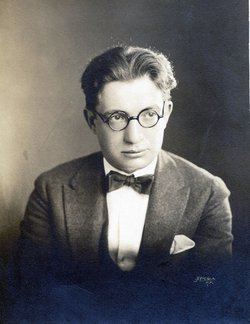
The celebration of our long history at our Spring Concert on May 12th would not be complete without singing a piece arranged or written by Cesare Sodero. In this concert, our wonderful soloist Brandie Sutton. will join the choir in performing Sodero's arrangement of Great is Jehovah, the Lord, (Die Allmacht) by Franz Schubert
In the hallowed archives of New York City’s musical history, few names command as much quiet respect as Cesare Sodero. While his name is etched into the history of the Metropolitan Opera and the early days of NBC radio, his tenure as a conductor for the Mendelssohn Glee Club remains a vital chapter in the preservation of the male choral tradition. Sodero was the quintessential "musician’s musician"—a man whose career was defined by an extraordinary transition from the intimate resonance of the cello to the grand, sweeping authority of the conductor's podium.
From the Cello to the Podium
Born in Naples in 1886, Sodero was a prodigy of the cello, studying at the Conservatory of Music in Naples under the legendary Francesco Serato. He arrived in the United States in 1906, quickly establishing himself as a formidable talent. However, Sodero’s musical mind was too vast for a single instrument.
By the 1910s and 20s, he had pivoted toward conducting, becoming a pioneer in the burgeoning world of recorded sound and radio. As the director of the Edison Phonograph Company’s recording orchestra, he conducted thousands of sessions, shaping the way the world first experienced opera through a horn.
Listen here to his transcription of Giacomo Puccini’s "Crisantemi" (transcribed for voice and orchestra). This 1920 recording of Claudia Muzio performing Giacomo Puccini’s "Crisantemi" is a haunting piece of history. While "Crisantemi" is most famous as an elegy for string quartet, this vocal version—conducted by Cesare Sodero
A Pillar of the Mendelssohn Glee Club
When Sodero took the helm of the Mendelssohn Glee Club, he brought a level of operatic precision and instrumental texture to the ensemble. His leadership was marked by a commitment to the "Fellowship" of the club—an atmosphere where the rigorous pursuit of musical excellence met the warmth of a shared community.
Under his baton, the Glee Club explored a repertoire that balanced the classic German male chorus tradition with contemporary arrangements. He understood the unique "vocal texture" required for male choruses, often treating the voices with the same lyrical phrasing he once applied to his cello. His influence helped sustain the club’s legacy as a premier institution for male choral music in New York, ensuring that the group remained a vibrant part of the city’s cultural fabric.
The Metropolitan Opera Years
The pinnacle of Sodero’s public career came in 1942 when he was appointed a conductor at the Metropolitan Opera. Coming to the Met during the challenging years of World War II, he was tasked with maintaining the highest standards of the Italian repertoire.
He made his debut with Aida, and over the next five seasons, he conducted over 150 performances. He was renowned for his "solid" and "reliable" hand, particularly in the works of Verdi and Puccini. Critics of the time often noted that his background as a cellist gave his conducting a unique subterranean warmth; he understood the "singing" quality of the strings as much as the breath of the singers.
A Lasting Legacy
Whether he was leading an informal singalong with the men of the Mendelssohn Glee Club or directing a star-studded cast at the Met, Cesare Sodero remained dedicated to the integrity of the score.
Today, as we look back at his contributions—from his early recordings to his leadership of New York’s oldest musical fellowships—we see a bridge between the Old World of Italian lyricism and the New World of American musical institution. Sodero wasn't just a conductor; he was a custodian of musical excellence.
Cesare Sodero’s impact on the Mendelssohn Glee Club wasn't limited to his physical presence on the podium; it was deeply embedded in the very sheets of music the men held in their hands. As a master orchestrator and composer, Sodero understood that the power of a male chorus lies in the balance of its four distinct parts: the soaring First Tenors, the lyrical Second Tenors, the grounding Baritones, and the resonant Basses.
The Architect of Four-Part Harmony
Sodero brought a uniquely "instrumental" approach to 4-part male choral arranging. Because of his background as a cellist, he didn't just see voices as singers; he saw them as a string quartet.
In his arrangements for the Club, he often utilized:
Contrapuntal Textures: Moving away from simple "block" chords, Sodero’s arrangements often gave the inner voices—the Second Tenors and Baritones—melodic independence, creating a richer, more complex tapestry of sound.
Vocal Orchestration: He was known for arranging folk songs and operatic choruses specifically for the MGC, ensuring that the First Tenor line sat in a "sweet spot" that provided brilliance without strain, while the Basses provided the "cello-like" foundation he knew so well.
Interweaving the Repertoire
During his tenure, the Glee Club’s repertoire expanded to include Sodero’s own sophisticated transcriptions. He often took works originally intended for mixed choir or solo voice and reimagined them for the specific "Fellowship" of male voices.
One can imagine the rehearsal process: Sodero at the piano or podium, meticulously adjusting the balance of a 4-part harmony to ensure the overtones shivered in the rehearsal hall. His arrangements required more than just "Experienced Singers"; they required musicians who could handle the operatic breath control and nuanced phrasing he demanded.
From the Met to the Music Room
What made Sodero’s arrangements so enduring was their dramatic flair. Even in a shorter choral piece, he would interweave the dramatic tension of a Verdi opera. When the MGC performed his arrangements, they weren't just singing a song; they were performing a miniature drama, structured through the rigorous but beautiful constraints of the four-part male tradition.
This legacy of craftsmanship is a cornerstone of the Club’s archives. Every time the Singers today open a score that bears his name, they are touching a piece of history that bridges the gap between the golden age of the Metropolitan Opera and the enduring spirit of the Mendelssohn Glee Club.
Cesare Sodero’s catalog of arrangements for the Mendelssohn Glee Club (MGC) reflects a sophisticated blend of his Italian operatic roots and the specialized needs of a premier American male chorus. While much of his work was created specifically for the Club's private use, several titles stand out in the archives and historical programs.
Here are the specific types of works and titles he brought to the four-part (TTBB) repertoire:
1. Original Choral Works
Sodero didn't just arrange; he composed original pieces that showcased the "vocal orchestration" he was known for.
"Fa la Nanna, Bambin": This is perhaps his most enduring choral contribution. It is a lullaby that utilizes the rich, dark textures of the baritone and bass sections to create a cradling effect, contrasted with a lyrical tenor melody.
"Canto di Caccia" (Hunting Song): A traditional theme for male choruses, but Sodero’s version is noted for its rhythmic drive and "brass-like" vocal writing.
2. Sacred and Seasonal Arrangements
Given his work during the 1930s and 40s, Sodero contributed heavily to the Club’s holiday and concert repertoire:
"Adeste Fideles" (O Come All Ye Faithful): Sodero created a specific TTBB arrangement (Galaxy Music, 1940) that focuses on a strong tenor solo accompanied by the "fellowship" of the four-part harmony. Listen here to an early Edison recording with Sodero's Band and a male choir. Click to Listen
"Ave Maria": He produced several transcriptions of sacred melodies, often treating the inner voices (Second Tenor and Baritone) with the contrapuntal independence he learned as a cellist.
3. Operatic Transcriptions
His true specialty was bringing the grandeur of the Metropolitan Opera to the intimate setting of the Glee Club. He famously arranged:
Verdi Choruses: Specifically, movements from Aida and Il Trovatore. He had a knack for thinning out orchestral textures into four distinct vocal parts without losing the "operatic weight."
Italian Folk Songs: He elevated popular Neapolitan songs into concert-level choral art, ensuring the "Singers" had material that was both technically challenging and emotionally resonant.
Why These Titles Matter
In the world of male choral music, these arrangements were revolutionary because they moved away from the "OOM-PAH" style of older German glees. Sodero’s scores—many of which are still preserved in the Mendelssohn Glee Club papers at the NYPL—required a level of breath control and phrasing that bridged the gap between amateur singing and professional artistry.
When the Club performs a Sodero arrangement today, they aren't just singing a melody; they are executing a piece of "vocal chamber music" designed by a man who saw no difference between a cello string and a human throat.


Comments